Perfume OEM Fragrance Concentration Guide — EDP vs EDT and Designing a Long-Lasting Scent
When developing a perfume through OEM, the first choice you face is usually “Eau de Parfum (EDP) or Eau de Toilette (EDT)?” Behind that choice lies the fragrance concentration. But concentration is about more than just “strength.” This article covers what concentration is, how the types differ, how it ties to cost, and how to design it around your brand — from a practical, manufacturing point of view.
What is fragrance concentration?
Fragrance concentration is the proportion of fragrance oil (the scent concentrate) in a perfume. The rest is mostly a base of alcohol and purified water. Generally, the higher the concentration, the more intensely the scent opens — so the same scent can give a different first impression depending on its concentration.
Typical concentration by type
| Type | Typical concentration | Character |
|---|---|---|
| Parfum (Extrait) | approx. 25–30% | Richest, tends to last longest |
| Eau de Parfum (EDP) | approx. 15–20% | Fairly rich; daily to gifting |
| Eau de Toilette (EDT) | approx. 5–12% | Light and fresh; everyday |
| Eau de Cologne (EDC) | approx. 2–4% | Very light |
These ranges are general guidelines and vary by product and manufacturer. One practical tip: even within the same “EDP” label, the actual concentration differs slightly from brand to brand. Because labeling conventions aren’t standardized, it’s more accurate to smell it in person and check the intensity rather than trust the number alone.
Concentration is directly tied to cost and price
This matters especially in OEM. The more fragrance oil you add, the higher the material cost — so concentration directly affects the unit price. The type of oils used (the synthetic-to-natural ratio, whether premium materials are included) also shapes both cost and the character of the scent.
So the goal isn’t “just make the concentration higher,” but to design concentration and fragrance composition together within a target price range. If you raise only the concentration while keeping the price fixed, you’d have to cut cost somewhere else.
A higher concentration doesn’t always mean it lasts longer — the three-tier structure
Surprisingly, a higher concentration doesn’t necessarily make a scent last longer, because a perfume changes over time. It unfolds in roughly three stages.
- Top notes — the brief opening right after spraying; light and quick to evaporate (citrus, herbs, etc.).
- Middle (heart) notes — the core of the scent (floral, spicy, etc.).
- Base notes — the longest-lasting layer (woody, musk, amber, etc.), slow to evaporate.
Longevity is mainly governed by the base notes and fixatives. So even a high concentration can open strong and then fade quickly if the base is weak, while a moderate concentration with a solid base can stay soft and last. In other words, concentration is “intensity,” while the note structure is “design over time” — both must align for the intended scent to come through.

The design changes with your target
So before “what percentage,” decide “who uses it, when, and where” first.
- Daily / mass-market — a light EDT, comfortable for commuting and everyday wear.
- Signature / gifting — an EDP for presence, with a solid base so the impression lingers.
- Seasonal — lighter in summer, richer and heavier in winter; the same scent feels different by season.
Smell it in stages — evaluating over time
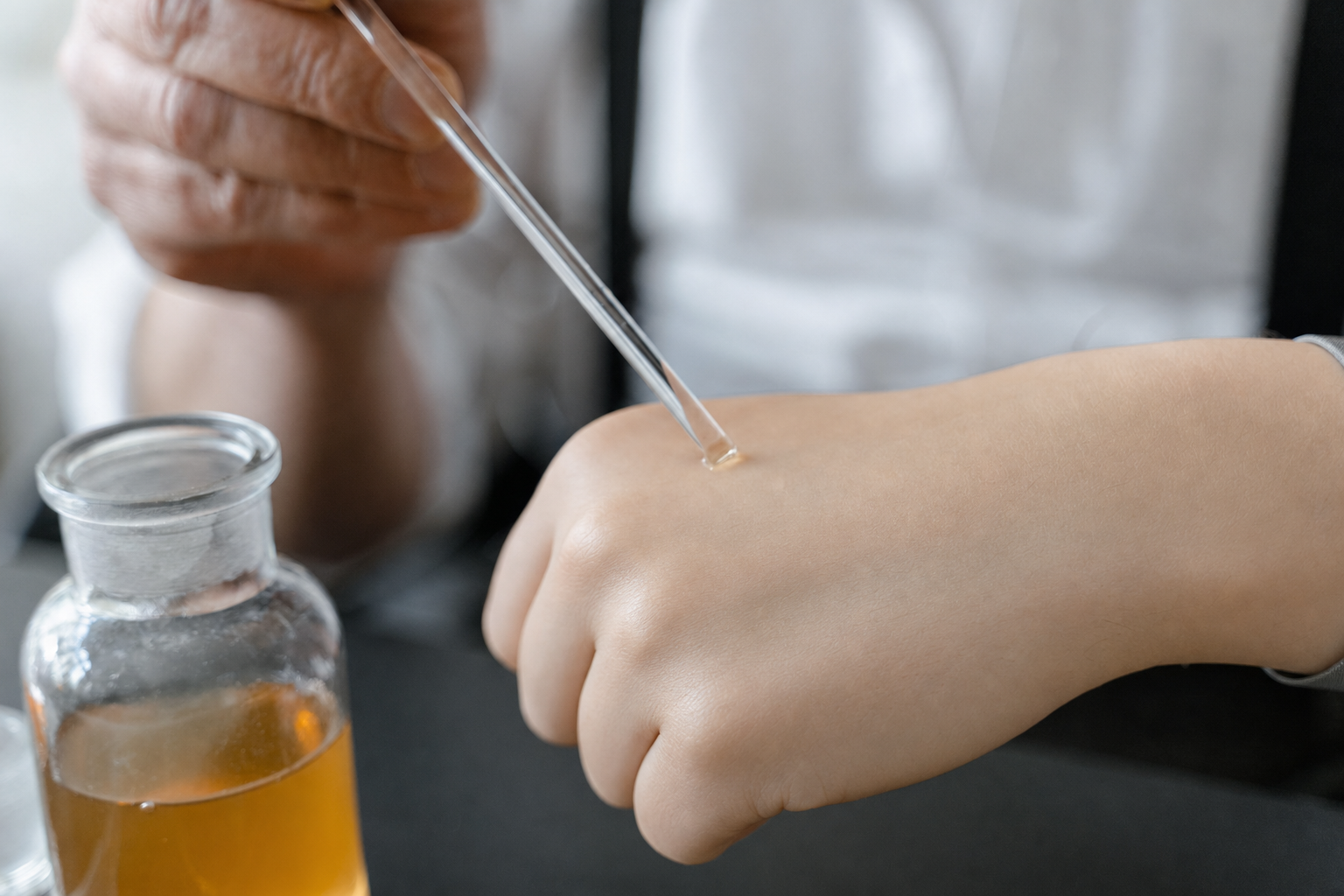
Because a scent changes over time, you shouldn’t judge it from a single sniff. We recommend evaluating it at three moments.
- First impression — right after spraying (top)
- After 10–30 minutes — the heart of the scent (middle)
- Much later — the lingering impression (base / dry-down)
Checking it stage by stage makes it far clearer whether “this scent fits our brand concept.”
Designing concentration around your brand
In short, good perfume OEM isn’t simply “what percentage,” but designing concentration, notes, and cost together to match the target, concept, and price range. At RAINT, certified perfumers and aromatherapists listen to your concept and strike this balance with you, manufacturing not only EDP and EDT but also solid and oil types in one place.
You can find the inquiry process on the RAINT inquiry page. (Longevity varies with the fragrance composition, skin, and environment, so it’s hard to state a fixed number — checking with a sample is the most accurate way.)

Frequently asked questions
Q. If it’s my first time, which type should I start with? A. It depends on your target and use. Many choose EDT for daily mass-market products and EDP for a rich signature. We decide together in consultation based on your concept.
Q. Is a higher concentration always a better scent? A. No. The balance of cost, target, and notes matters more. A high concentration isn’t always the right answer.
Q. Can the scent intensity be adjusted? A. Yes — we adjust the scent and intensity at the sample stage. The scope of revisions is set in the contract.
Q. What is the minimum order quantity? A. From 2,000 units per scent and 5,000 units in total.
From manufacturing to brand management, talk to RAINT for a one-stop partnership.
Get in touch