Choosing a Perfume OEM Manufacturer — How to Tell a Direct Maker from a Broker

When you start a perfume brand, the first gate you face is choosing an OEM manufacturer. Yet from a quote and a company profile alone, it’s hard to tell which companies actually make the product themselves and which simply connect you to another factory. This article lays out how to distinguish a direct manufacturer from a broker/developer, and what to check before you sign.
The difference shows up not in normal times, but “when something goes wrong”
From a quote and a company profile, vendors tend to look similar. The real difference shows up not in normal times but when a problem occurs.
Suppose a defect appears during mass production, or a recall becomes necessary. In a three-party structure of brand – broker – actual factory, responsibility tends to get diffused, with each party saying “we only connected you” or “we made it as instructed.” A direct manufacturer, by contrast, has a single, clear party responsible.
It’s also not uncommon for the sample to be satisfactory while the mass-produced product turns out different. Without directly controlling production, this kind of variance is hard to catch.
So before debating “is it a direct manufacturer or not,” the key is to confirm what that company is responsible for and whether it directly controls production. For the record, a broker/developer isn’t automatically a worse choice. There are good developers who compare multiple manufacturers and manage schedule and quality to raise efficiency. What matters is whether responsibility and control are clear.
Direct manufacturer vs. broker/developer — what’s different
| Aspect | Direct manufacturer | Broker / developer |
|---|---|---|
| Manufacturing facility | Owns its own | May have none |
| Production control | Manages schedule & quality directly | Depends on outside factories |
| Where responsibility lies | Clear manufacturing party | Needs to be confirmed by contract |
| Strength | Direct control of quality & lead time | Compares vendors, plans |
Five criteria for checking whether it’s a direct manufacturer
- Cosmetics manufacturing registration certificate — check whether they hold a registration certificate that also states the manufacturing site address.
- Manufacturing site address — see whether the address on the certificate matches where production actually takes place.
- Tax invoice / transacting party — see whether that manufacturer issues the tax invoice directly. The issuing party can differ depending on the transaction structure, so if it differs from the actual maker, check why.
- Test reports / production record management — see whether they manage quality documents themselves or depend on outside parties.
- Liability & recall clauses — confirm that the contract specifies who is responsible if a quality issue or recall arises.

Points to check together in the quote and contract
Once you’ve confirmed the manufacturing party, it’s good to check the following at the quote and contract stage as well.
- Fragrance formula / oil ownership — who owns the formula of the scent that was developed.
- Leftover materials / mold ownership — who keeps the remaining materials and molds.
- Formula transfer when changing manufacturers — whether you can take the scent with you if you later switch manufacturers.
- Reorder price stability — whether the same unit price holds on reorders.
The more clearly these items are written into the contract, the more stably you can run your brand.
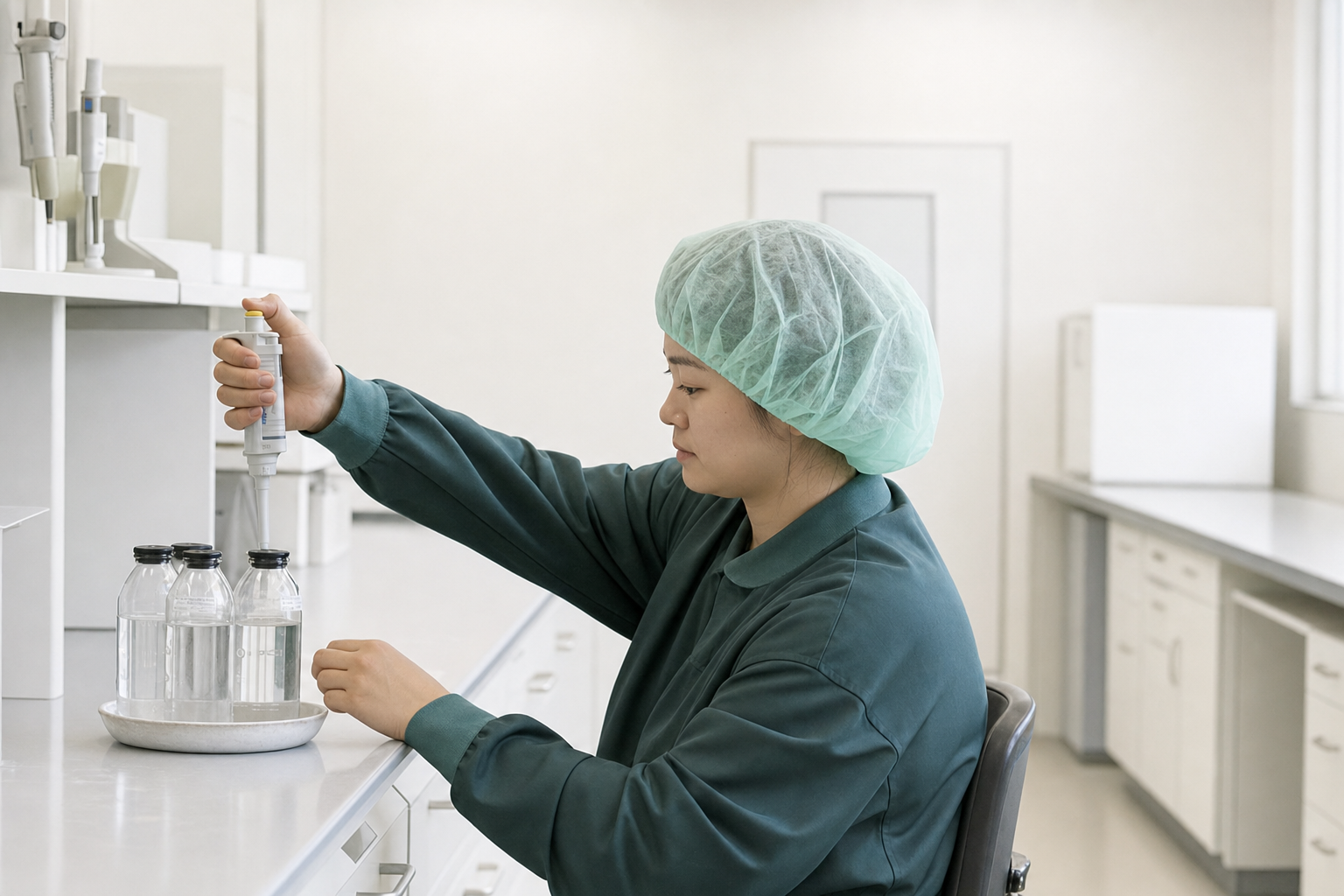
What kind of manufacturer is RAINT
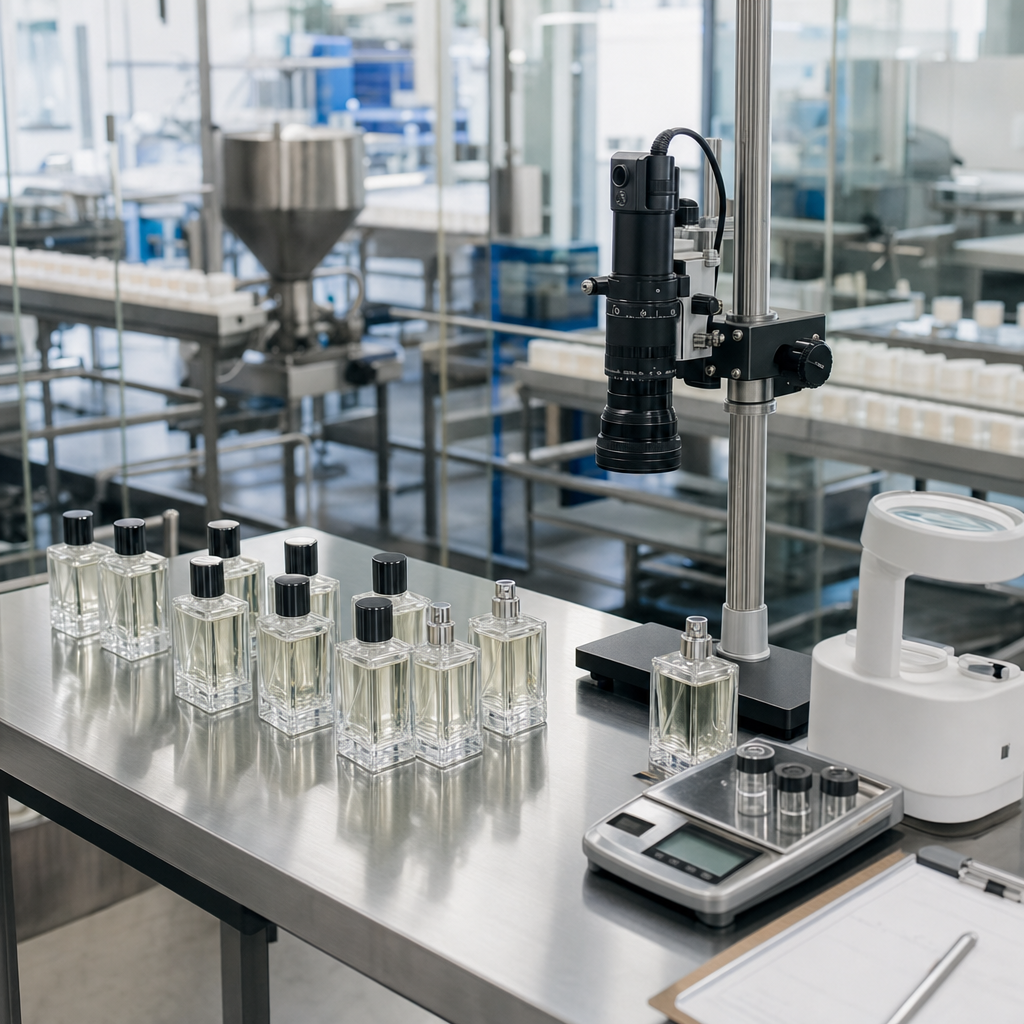
RAINT is a direct manufacturer. For more than 13 years it has produced perfume, diffusers, and body care on an OEM/ODM basis, and it operates a roughly 7,300㎡ (2,200-pyeong) manufacturing, logistics, and R&D center in Busan. From perfumery to production, everything is done in one place at ISO 9001- and ISO 22716-certified facilities, and the company handles manufacturing-related permits and filings as well. Fragrance formula and trademark ownership are guaranteed to the client, and NDAs are signed.
You can find the detailed inquiry process on the RAINT inquiry page, and company and facility information at raint.kr.
Conclusion
When choosing an OEM manufacturer, the most important thing isn’t the per-unit price. It’s first whether they actually make the product, and whether the scope of responsibility is clear when something goes wrong. More than a few cents in initial unit price, it’s the response when a problem arises that protects your brand.
Frequently asked questions
Q. What is the minimum order quantity (MOQ)? A. RAINT works from 2,000 units per scent and 5,000 units in total. It can vary by product configuration, so we’ll guide you in consultation.
Q. Can the scent be revised? A. We check and adjust scent, color, and appearance at the sample stage. The scope of revisions is set in the contract.
Q. Who registers as the cosmetics responsible-distributor? A. We handle manufacturing-related permits and filings together with you. However, a cosmetics responsible-distribution registration (a Korean regulatory requirement) may be needed when you distribute and sell under your own brand, so we confirm who should register based on your business structure.
From manufacturing to brand management, talk to RAINT for a one-stop partnership.
Get in touch